
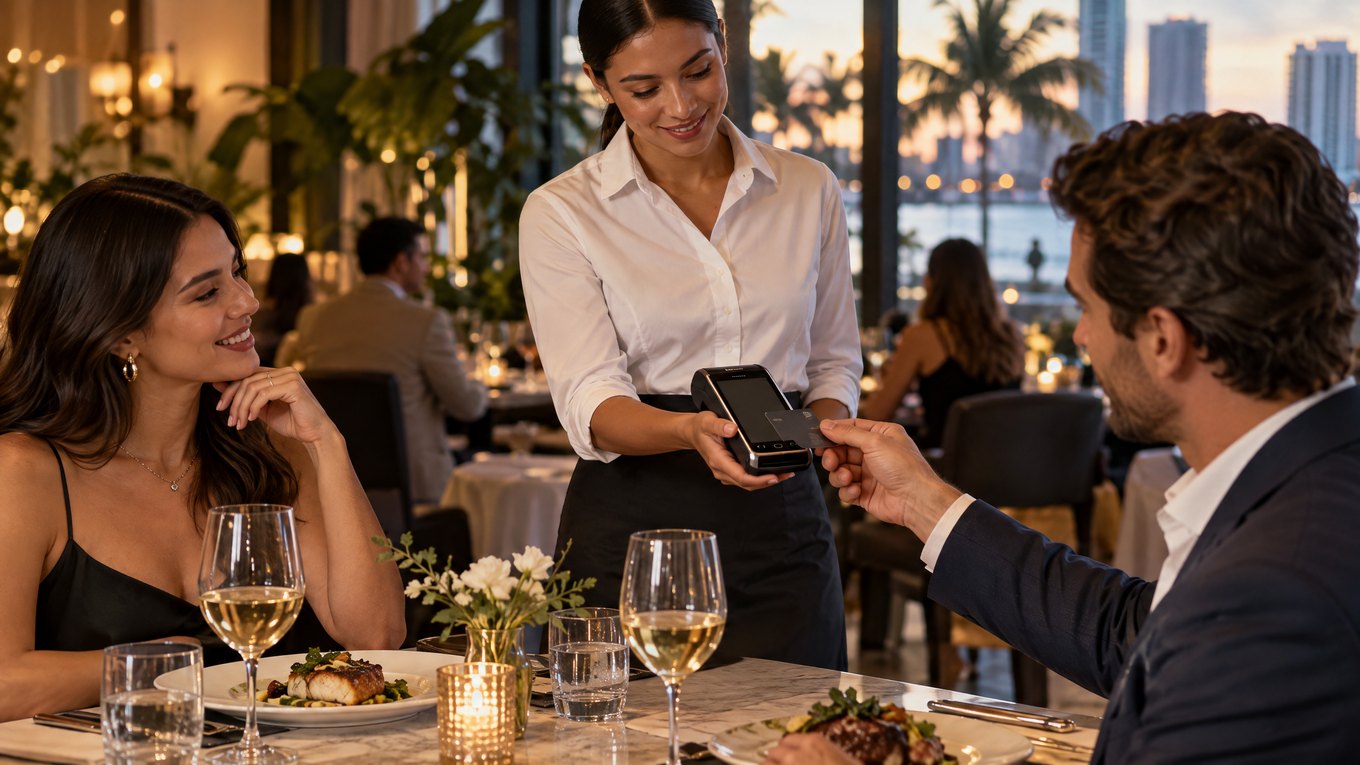

Quick takeaway: Miami restaurants need payment services that match their service style, whether they run a café counter, food truck, fast-casual location, bar, or full-service dining room.
Begin With the Service Model
The right payment setup depends on where guests order and pay. A café may need fast counter checkout. A full-service restaurant may need tableside payment, tipping, and split transactions. A food truck may prioritize portable equipment and dependable connectivity.
Restaurant merchant services can include payment processing, POS software, contactless payments, online ordering, tableside terminals, gateways, reporting, and chargeback support.
For a broader explanation of how restaurant payments connect to processors and payment networks, read Local POS Broker’s payment processing solutions guide.
Three Payment Moments to Plan For
1. In-person checkout
Guests may pay with credit cards, debit cards, contactless cards, or mobile wallets. Fast prompts and reliable terminals can reduce lines during lunch and dinner rushes.
2. Tableside payment
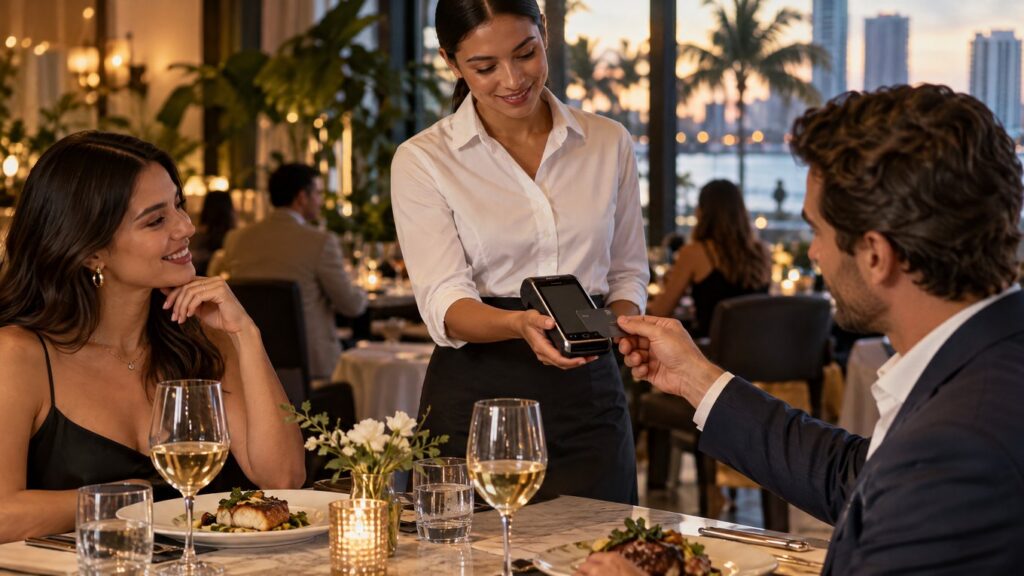
Full-service restaurants can bring a payment device to the table. This can support faster settlement, clearer tipping, and a more convenient guest experience.
3. Online and off-premise orders
Restaurants may also accept payment through websites, ordering platforms, apps, delivery orders, and pickup channels. A connected setup can help keep those transactions organized with in-store sales.
Features Worth Comparing
•Menu and order management
•Multiple payment methods and contactless acceptance
•Tableside or mobile payment options
•Online ordering and gateway connections
•Tipping, split payments, and open tabs when needed
•Sales reports and transaction tracking
•Employee permissions and operational tools
•Security, support, and chargeback assistance
Integrated tools can reduce manual entry between payments, sales, and other records. Local POS Broker explains the broader concept in its integrated small-business payment solutions guide.
Match the Setup to the Restaurant
•Fine dining: Tableside terminals, tipping, and discreet payment workflows
•Fast-casual: Quick checkout and consistent order processing
•Food trucks: Portable hardware, cellular connectivity, and fast transactions
•Cafés: Contactless acceptance and efficient high-volume counter service
•Bars: Open tabs, split payments, tipping, and reliable support
Miami restaurants serving tourists and international visitors may benefit from accepting familiar card networks, contactless payments, and mobile wallets.
Understand the Cost
Processing costs can vary by card type, transaction volume, payment method, business risk, pricing model, hardware, and software. Compare more than a headline rate.
Before signing up, ask about:
1.Transaction and monthly fees
2.Equipment, installation, and software costs
3.Gateway, PCI, chargeback, and cancellation fees
4.Contract length and price-change terms
5.Support hours and replacement procedures
6.Costs for additional locations or sales channels
For a practical fee-review method, see Local POS Broker’s guide to saving money on payment processing fees.
Choosing a Provider in Miami
Look for experience with restaurant operations, clear written pricing, dependable support, secure payment technology, and a setup that can scale. Test the workflow during a realistic rush—not only during a quiet demonstration.
Confirm how the provider handles tips, refunds, chargebacks, offline situations, online orders, and integrations before signing an agreement.
Final Recommendation
Restaurant merchant services in Miami should be selected around the restaurant’s actual guest journey. Compare counter, table, online, and delivery payments together so the system supports both service quality and daily operations.
Restaurants reviewing broader merchant-services options can also explore The Direct Processors’ payment services, including recurring billing, invoicing, electronic checking, and gateway integration. Review the available services and terms before selecting a provider.