

A POS can record every sale and still slow growth. Long queues, stock errors, duplicate data entry, and delayed reports may signal friction. However, those signs do not automatically mean you need new software. Measure the problem first.
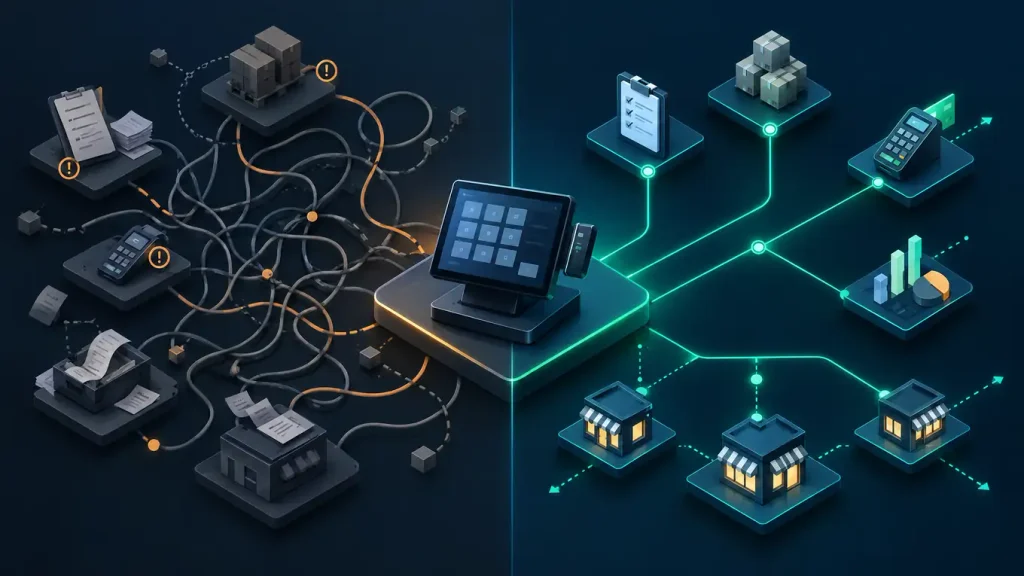
Four bottlenecks to measure
- Manual re-entry: Copying sales, product, or payment data between systems wastes staff time and invites errors. Track correction hours, duplicate records, and report-preparation time each week.
- Unreliable inventory: Stockouts, over-ordering, and repeated adjustments suggest that sales and stock records may not stay in sync. Measure stockout frequency and inventory corrections before changing platforms.
- Slow checkout or refunds: Long lines, sluggish payment devices, and slow exchanges can hurt service. Record peak transaction time, failed tenders, refund time, and customer wait time. For a buying checklist, see these questions to ask a POS provider.
- Growth friction: New locations or channels may create duplicate setup, disconnected reports, or surprise equipment costs. Compare the time and cost to add users, devices, and locations. This guide to merchant services for growing businesses covers payment and integration needs; the Florida POS replacement guide outlines system-change planning.
Choose the smallest effective fix
- Fix settings, permissions, hardware placement, or staff training when the platform already supports the needed workflow.
- Integrate when the POS works but important data remains separated.
- Pilot a proposed change using real items, payments, refunds, staff, and reports.
- Replace only when core limits persist or workarounds cost more than a better-fit system.
Before and after a change, compare a 30-day baseline for checkout speed, stockouts, reconciliation effort, errors, and report preparation. That way, you can tell whether the fix actually helped.
Merchant services can extend beyond processing. For example, The Direct Processors’ services section lists POS, gateway integration, recurring billing, invoicing, electronic checking, and QuickBooks support. Confirm availability and terms directly with any provider.
Take your busiest-day tasks into a pilot: update an item, make a sale, issue a refund, reconcile the payment, and run a report. Keep the change only if it removes the measured bottleneck without creating more work.
6 Replies to “Could Your POS System Be Holding Back Growth?”