

Merchant services in Florida involve more than a card reader. Your payment provider can affect how you accept sales, receive deposits, manage costs, and support customers. Therefore, compare the complete setup—not just the terminal or headline rate.

What merchant services include
Merchant services combine the tools and support a business uses to accept and manage payments. Depending on your needs, they may include:
- Credit and debit card processing, including contactless and mobile wallets
- POS systems, countertop or wireless terminals, and mobile readers
- Online gateways, payment links, recurring billing, and invoicing
- Reporting, transaction management, and payment-related support
A good setup should fit your operations today and scale as you add sales channels or locations.
Know who handles each part
A sales representative or service company may arrange a payment solution, while another company processes the transaction. Before you sign, ask who processes payments, who manages the merchant account, where you should call for support, and how the provider handles funding or disputes. For a quick breakdown of gateway and processor roles, see the payment gateway vs. payment processor guide.
Match equipment to the way you sell
Choose equipment based on your checkout and work setting:
- Fixed checkout: Countertop terminals or a full POS can suit stores and restaurants.
- Mobile sales: Wireless terminals and card readers can support events, field service, or tableside payments.
- Online and invoiced sales: A gateway, payment link, or recurring-billing tool can extend payment options beyond the counter.
Before buying or leasing equipment, confirm that it works with your POS, accounting, inventory, and online tools. Also check who owns the device and who repairs or replaces it.
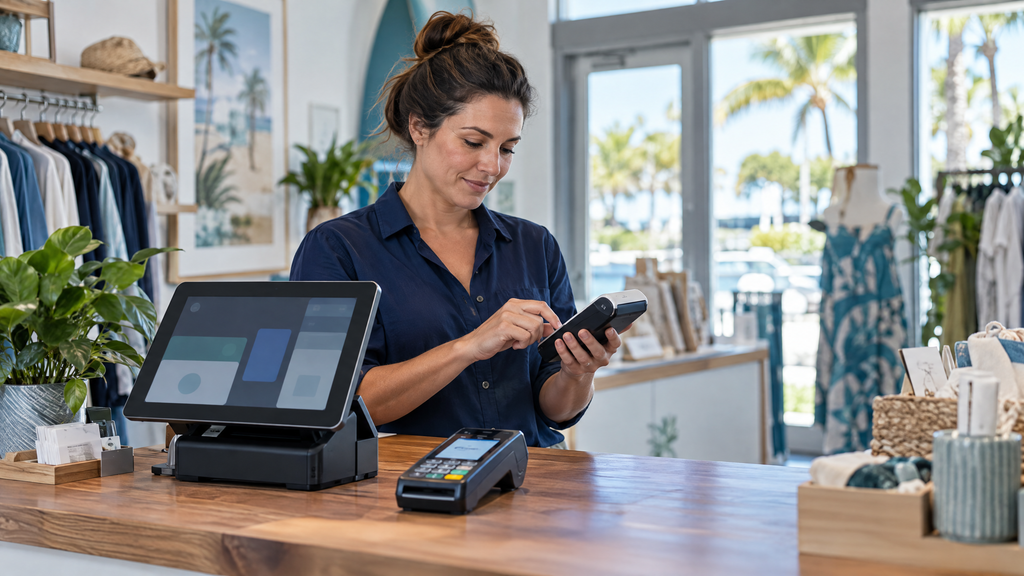
Five questions to ask providers
- Pricing: What transaction, monthly, gateway, equipment, statement, or cancellation fees will I pay? Compare the full breakdown with this credit-card processing fees explainer, not just the advertised rate.
- Funding: When will deposits arrive, and how will they appear on my bank statement?
- Support: Who handles declines, equipment faults, chargebacks, or funding delays—and how do I reach them?
- Security: What security tools does the provider supply, and which PCI DSS duties remain with my business?
- Fit and growth: Will the system work with my sales channels now and support more employees or locations later?
The lowest headline rate is not always the best value. Instead, compare written terms, equipment fit, funding, integrations, and support against your actual operations.
How Local POS Brokers can help
Local POS Brokers helps Florida businesses review POS systems, terminals, payment options, and provider fit. Discuss your current setup and ask which solutions suit your sales channels, budget, and growth plans.
For another example of a provider offering multiple merchant services, The Direct Processors’ services section lists recurring billing, a QuickBooks plug-in, invoicing, electronic checking, gateway integration, and POS options. Confirm current availability and terms directly with any provider.