
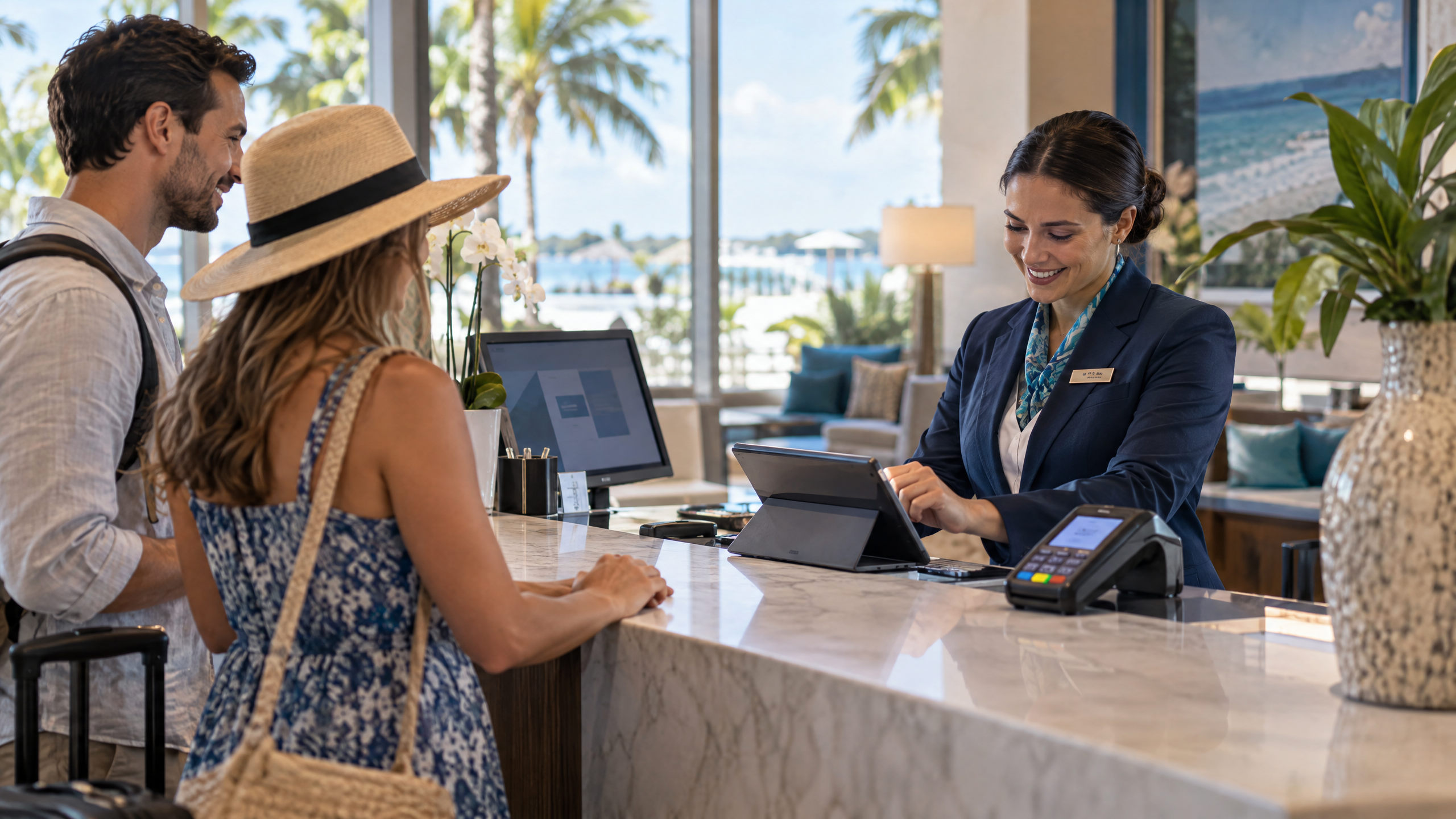
Florida tourism businesses serve customers who expect fast, flexible, and convenient payment options. Hotels, vacation rentals, tour operators, attractions, restaurants, boat charters, transportation companies, and souvenir shops may all accept payments in different settings—from a front desk or ticket counter to a beach, boat, mobile kiosk, or online booking page.
That variety makes the right merchant-services setup especially important. A tourism business needs payment processing, POS equipment, and account support that can handle seasonal demand, mobile transactions, deposits, refunds, and changing customer expectations.
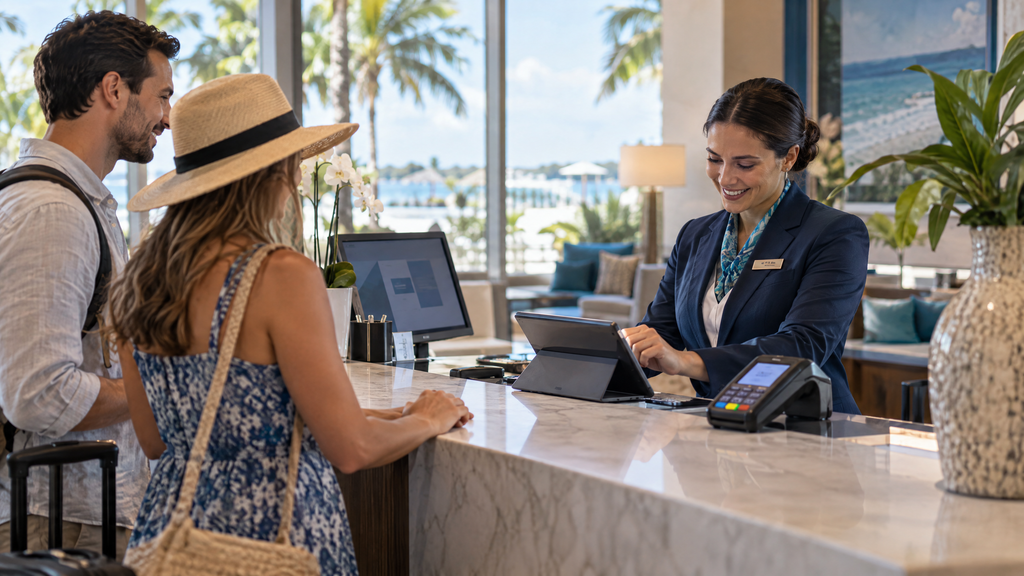
Why Payment Processing Matters in Florida Tourism
Tourism businesses often process payments across multiple sales channels. A customer might discover a tour online, pay a deposit in advance, complete a balance payment at check-in, and purchase an additional service from a mobile terminal later.
A business may need more than a basic countertop card reader. It may need an online payment gateway, a POS system, mobile equipment, invoicing, recurring billing, or a way to connect payments with reservations and ticketing.
The payment experience also affects the customer experience. When customers can pay quickly and securely, staff spend less time resolving payment problems and more time serving guests.
Common Tourism Businesses That Need Flexible Payment Options
Florida tourism includes many types of businesses, and each one may need a different setup:
- Hotels, resorts, and vacation-rental operators
- Tour companies and excursion providers
- Boat, fishing, and sailing charters
- Water-sports and beach businesses
- Theme parks, museums, and attractions
- Restaurants, cafés, and bars near tourist destinations
- Souvenir, gift, and apparel shops
- Airport transportation and shuttle companies
- Event, ticketing, and entertainment businesses
- Travel agencies and reservation services
A provider should recommend equipment and processing services based on the business model rather than offering the same solution to every merchant. For a wider overview of payment tools, fees, and provider selection, read this Florida merchant-services and payment-processing guide.
Payment Challenges for Florida Tourism Businesses
Seasonal transaction volume
Many tourism businesses experience a major difference between peak and off-peak seasons. During busy periods, transaction volume may rise quickly. During slower periods, a business may still pay monthly account, software, equipment, or minimum-volume fees.
Before signing an agreement, ask how pricing, equipment, minimums, and support work during both peak and off-season months. Also review recent processing statements so you can compare total costs against your actual sales pattern.
Mobile and outdoor payments
Tour operators, beach vendors, attractions, and event businesses may accept payments away from a traditional checkout counter. A wireless terminal or mobile reader can help staff accept payments at a dock, boarding area, ticket line, market, or customer location.
Outdoor and mobile operations require more than portable equipment. Ask about battery life, wireless connectivity, offline-payment capabilities, device security, replacement procedures, and access to support if a terminal stops working during a busy period.
Deposits, reservations, and refunds
Hotels, vacation rentals, tours, and attractions may collect deposits or advance payments. They also may need to manage cancellations, partial refunds, no-shows, rescheduled activities, and additional charges.
For that reason, ask whether the payment solution supports:
- Advance deposits
- Payment links
- Invoicing
- Recurring payments
- Partial and full refunds
- Cancellation charges
- No-show policies
- Reservation or ticketing integrations
- Clear transaction and settlement reports
The provider should explain how these transactions appear on statements and how staff can process them accurately.
Contactless and digital-wallet payments
Visitors may expect to pay with contactless cards or mobile wallets. The Federal Reserve’s 2025 Diary of Consumer Payment Choice reported that consumers used mobile phones for 23% of all payments in 2024, including both in-person and remote payments.
Tourism businesses should ask whether terminals support contactless cards and commonly used digital wallets. The business should also confirm that the equipment works with its POS system and that receipts and refunds follow the same process across payment types.
Card-not-present reservations
Online bookings and phone payments create different risks from face-to-face transactions. A tourism business should ask about address verification, fraud tools, tokenization, secure payment links, and procedures for handling disputes.
Security tools do not replace good operating procedures. Train employees to protect login credentials, follow refund rules, and avoid storing card information in email, spreadsheets, or personal devices.
Choosing POS Equipment for a Tourism Business
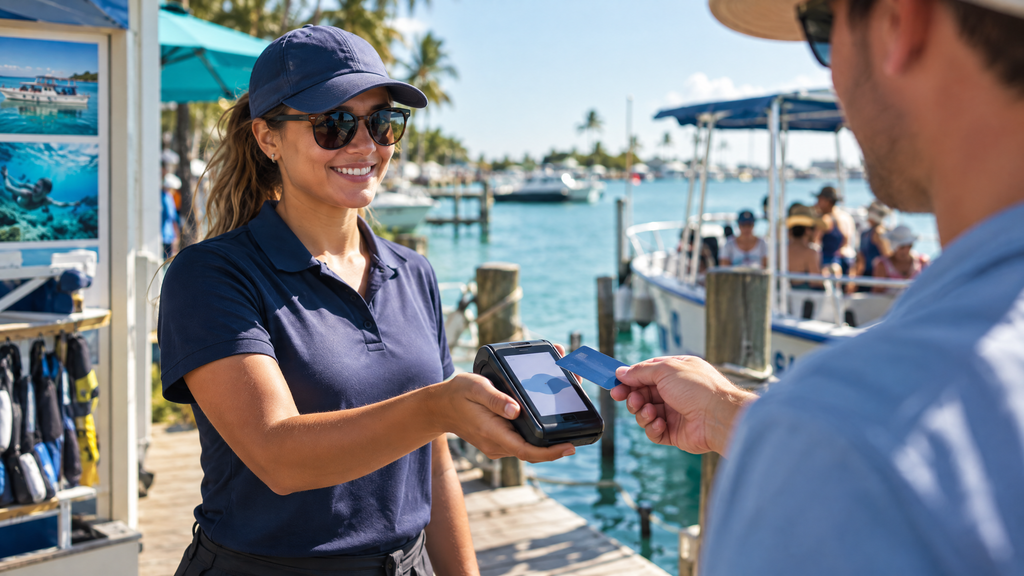
The right equipment depends on where the business accepts payments.
Countertop terminals
Countertop equipment works well for hotel desks, attraction entrances, retail stores, and fixed restaurant locations. Look for chip, contactless, and mobile-wallet support, as well as reliable receipt and reporting functions.
Wireless terminals
Wireless terminals can support tableside service, hotel amenities, event areas, docks, and ticket lines. Ask about network coverage, battery performance, device replacement, and security controls.
Mobile card readers
Mobile readers may suit tour guides, contractors, market vendors, beach businesses, and service providers who operate away from a fixed location. Confirm whether the reader works with the business’s smartphone or tablet and whether the provider supports the device.
Online payment gateways
An online gateway can connect a website, booking page, ticketing system, or payment link to the business’s payment-processing account. Ask whether the gateway integrates with the tools the business already uses.
POS and reservation integrations
A tourism business may need payment data to connect with reservations, ticketing, accounting, inventory, or customer-management software. Before choosing a system, confirm which integrations are included, which require extra fees, and who handles support when two systems do not communicate correctly. For related guidance on connected POS features, mobile workflows, and seasonal capacity, see modern POS systems for Florida businesses.
How to Compare the Total Cost
Do not compare providers by the advertised transaction percentage alone. Total costs may include:
- Interchange and network costs
- Processor markup
- Per-transaction fees
- Monthly account or software fees
- Payment-gateway charges
- Equipment purchase, rental, or lease costs
- Statement or batch fees
- PCI or compliance charges
- Chargeback fees
- Cancellation or early-termination fees
To calculate the effective processing rate, use this formula:
Total processing fees ÷ total processed sales × 100 = effective processing rate
If a business pays $450 in total processing fees on $30,000 in monthly card sales, its effective rate is 1.5%.
The U.S. Chamber of Commerce recommends using an effective-rate calculation because it accounts for the total cost rather than focusing on one transaction fee. As a result, the calculation can help a tourism business compare providers more accurately across peak and off-season periods.
Security Questions to Ask
The PCI Security Standards Council states that PCI DSS applies to environments where payment account data is stored, processed, or transmitted. Tourism businesses should ask a provider:
- What security features does the solution include?
- Does the system support encryption or tokenization?
- What PCI DSS responsibilities remain with the business?
- How should employees check terminals for tampering?
- How does the provider handle suspected fraud or account compromise?
- Which employees can access refunds, reports, and payment details?
- What happens if the business loses a device or an employee leaves?
Use individual employee logins and limit access to refunds, reports, and customer information according to each person’s role.
Questions to Ask a Merchant-Services Provider
Before choosing a provider, ask:
- Can you support both online and in-person payments?
- Do you offer countertop, wireless, and mobile equipment?
- Can the system handle deposits, refunds, cancellations, and no-shows?
- Does it integrate with our booking, ticketing, accounting, or POS software?
- How do pricing and minimums work during the off-season?
- What fees appear on a typical monthly statement?
- How long does funding usually take?
- Who provides support when a terminal or gateway stops working?
- What happens if we add a location or sales channel?
- Can you review our current statement and estimate our effective rate?
Ask the provider to explain the complete cost using your actual transaction volume, average ticket, card mix, and sales channels.
How The Direct Processors Can Help
The Direct Processors helps Florida businesses review merchant services, POS systems, payment terminals, mobile equipment, and processing options. A tourism-focused business can discuss its seasonality, booking process, equipment needs, and payment channels before selecting a solution. As an example of a broader merchant-services lineup, The Direct Processors’ services section lists recurring billing, a QuickBooks plug-in, invoicing, electronic checking, gateway integration, and POS options. Confirm current availability and compare provider terms with your business needs.
Ready to review your tourism business payment setup? Contact The Direct Processors to discuss your processing, POS, and equipment needs.
Frequently Asked Questions
What payment system does a Florida tourism business need?
The right system depends on how the business sells. A hotel may need a countertop POS system and online deposits, while a tour operator may need a booking gateway and wireless terminal. A business that sells in several ways may need an integrated solution across online, mobile, and in-person channels.
Can a tourism business accept payments outside a storefront?
Yes. Wireless terminals and mobile card readers can support payments at events, docks, attractions, beaches, markets, and customer locations. Confirm connectivity, battery life, security, and support before relying on mobile equipment.
How should seasonal businesses compare merchant-services pricing?
Review total fees across both peak and off-season months. Ask about monthly minimums, equipment charges, software fees, contract terms, and whether the provider can scale equipment or support as transaction volume changes.
Can payment processing support deposits and refunds?
Many providers support deposits, payment links, invoices, refunds, recurring payments, and cancellation charges. Confirm which features the specific provider offers and whether they integrate with the business’s reservation or ticketing system.
Should Florida tourism businesses accept contactless payments?
Contactless acceptance can make checkout more convenient for visitors. Ask whether the terminal supports contactless cards and mobile wallets and whether those transactions work with the POS, reporting, and refund process.
How can a tourism business reduce payment-processing costs?
Start by reviewing recent statements, calculating the effective rate, identifying recurring fees, comparing pricing models, and matching equipment to actual sales channels. A provider review can help clarify which costs may be negotiable or avoidable.