
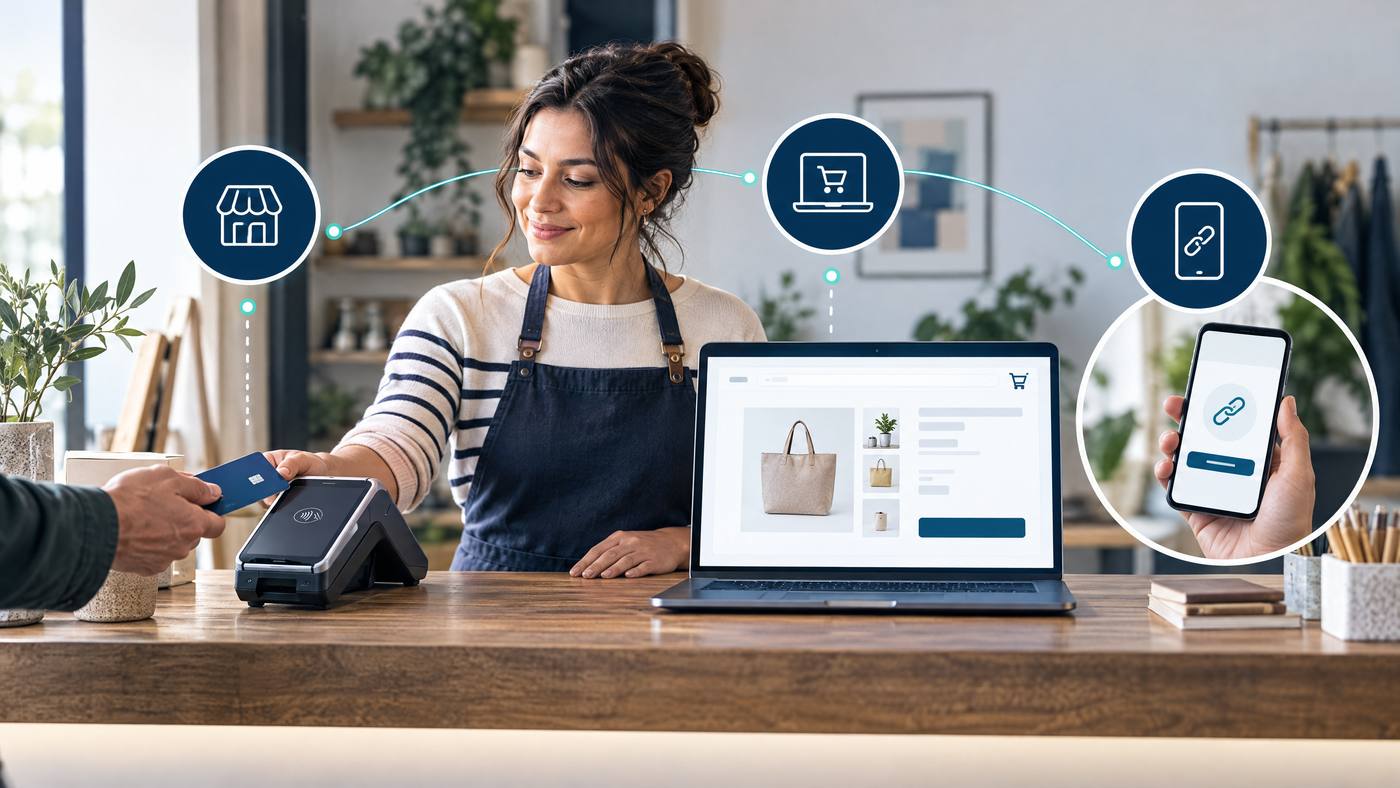
Square is often considered as a connected payment and business toolkit—not just a standalone gateway. Depending on your location, account, and plan, it may support in-person, online, mobile, and remote payments. Start with the way customers buy, then confirm current product availability, fees, and terms for your business.
Choose the setup for your sales channel
- In person: A Square POS setup may fit a store, restaurant, salon, or service counter. Compare hardware, connectivity, staff permissions, returns, and the features included in the plan.
- Online: Use an online storefront or a compatible website integration for products, ordering, or bookings. Test inventory, taxes, fulfillment, refunds, and customer notices before launch.
- Remote: Payment links and invoices can collect deposits or balances without building a full checkout. A Virtual Terminal may fit phone orders, but manually entered payments can have different fees and risk—check current terms and safeguards.

Check the full cost and workflow
Compare transaction rates by sales channel, monthly software plans, hardware, add-ons, transfer options, and dispute costs. Local POS Broker explains the difference between a payment gateway and a payment processor and outlines common credit card processing fees.
- List where you sell and what payment methods customers expect.
- Test a complete sale, refund, receipt, and reconciliation in each channel.
- Confirm account eligibility, current pricing, settlement timing, and support before relying on the setup.
Explore the wider merchant-services mix
Some businesses may want to compare services beyond one POS ecosystem. The Direct Processors’ services section describes recurring billing, invoicing, electronic checks, a QuickBooks plug-in, gateway integration, and POS solutions. Verify current availability and terms with the provider.
The takeaway: Choose the simplest Square setup that covers your current sales channels, and expand only when customer demand and operating needs justify it.