
Florida growth is not about buying the most equipment or taking the fastest funding offer. It starts with matching the checkout to the work, understanding where cash gets tied up, and comparing the full cost before committing.
Start where the sale happens
A setup for a boutique is different from one for a café or a mobile service business. Build around the tasks that actually happen each day:
•Retail: barcode inventory, a customer-facing display, and quick returns.
•Café: order routing, tip support, and handheld or counter payments.
•Mobile services: portable card acceptance, invoices, and payment links.
Choose only the hardware and software your team will use, then confirm that sales, inventory, and reporting connect as expected. This guide to questions for a POS and merchant-services provider can help compare the whole setup—not just the terminal.

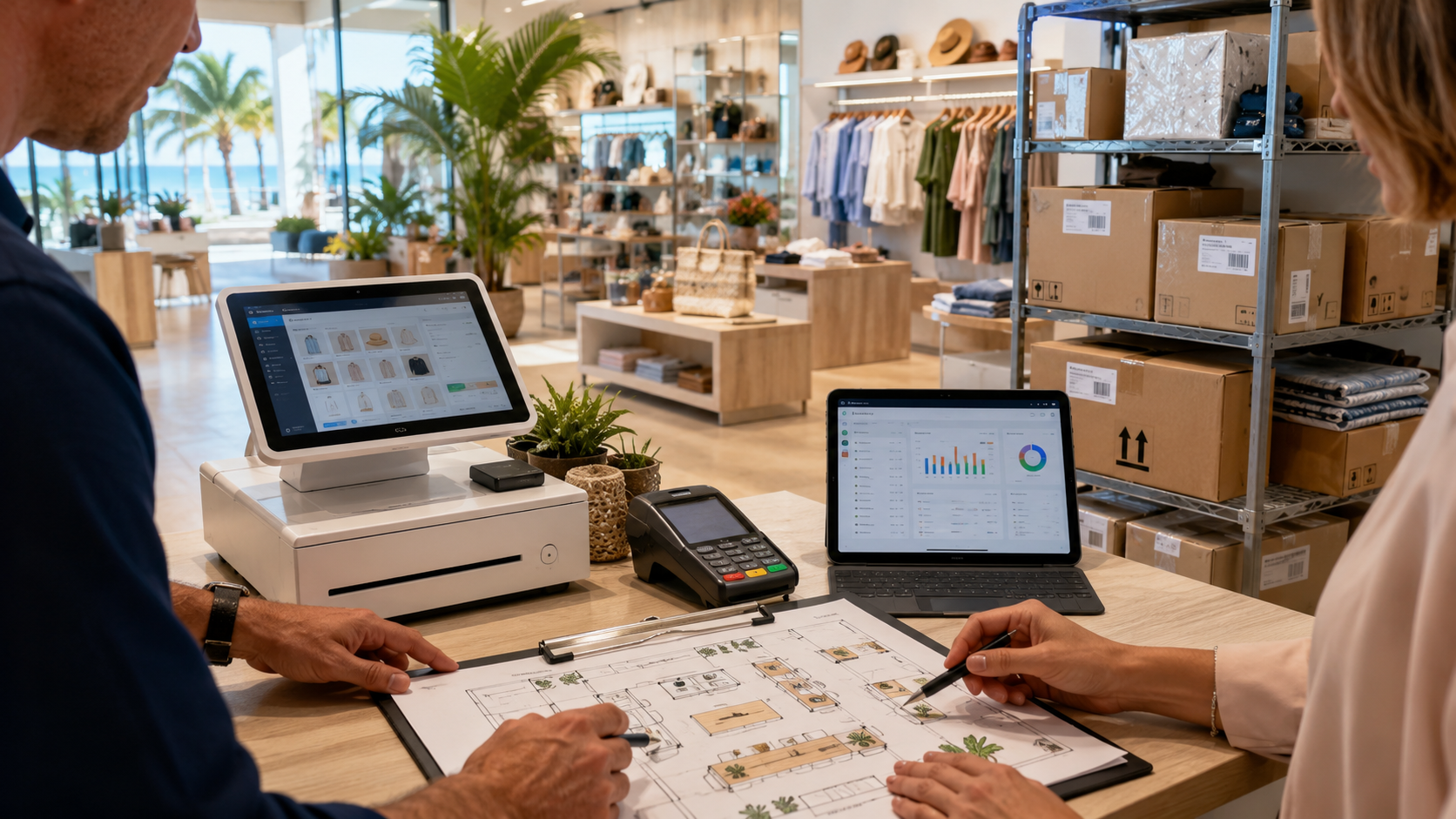
Original image: a Florida retailer and POS advisor reviewing the checkout workflow.
Follow the money after checkout
A sale is only one part of the picture. Review settlement timing, processing fees, refunds, and daily reports alongside the deposit that reaches the business account. A connected workflow can make reconciliation easier, but fees and funding schedules depend on the provider and agreement. For a broader overview, see the site’s Florida merchant-services guide.
Match the funding to the gap
Different needs call for different questions. Equipment leasing may spread hardware costs over time, but compare total payments, term, ownership, and end-of-lease terms. A merchant cash advance is based on future receivables under its contract; check the total repayment, fees, payment method, and how slower sales are handled—do not assume payments automatically fall. Invoice factoring can turn eligible invoices into earlier cash, but fees, advance terms, recourse, and customer notification vary.

Before signing, ask for all costs and obligations in writing and review them with an appropriate financial professional. If a system upgrade is part of the plan, use this Florida POS replacement guide to think through testing, data, and rollout.
For a wider menu of merchant-service options, The Direct Processors’ services section describes offerings such as invoicing, recurring billing, electronic checks, gateway integration, POS solutions, and business funding. Verify current availability and terms directly with the provider.
Growth rule: Fix the operational bottleneck first; take on financing only when the total cost, repayment terms, and expected business use are clear. A well-matched system is one your staff can use and your business can afford through both busy and slower periods.